
Beginner's Guide to Sciatica: Relief in Woollahra & Bondi


What if that sharp, electric-shock sensation shooting down your leg isn't a sign that your back is "broken," but rather your nervous system's way of asking for a change in rhythm? Many people in our Woollahra community come to us feeling frustrated because they can't sit through a workday without discomfort. You might be wondering exactly what is Sciatica and why it feels so intrusive in your daily life. It's common to worry that a "quick fix" or a forceful crack might make things worse, but your body is actually a system with immense untapped potential for harmony.
We understand that you're looking for a gentle path to relief that avoids invasive procedures and respects your body's natural intelligence. In this guide, we'll explore the root causes of this discomfort through a nervous-system-centered lens. You'll discover how we use a supportive approach to help you return to comfort and long-term wellness. We'll also look at how shifting your internal state can move you from a place of tension toward a more vibrant, energetic future.
Table of Contents
What is Sciatica? Understanding the Body's Largest Nerve
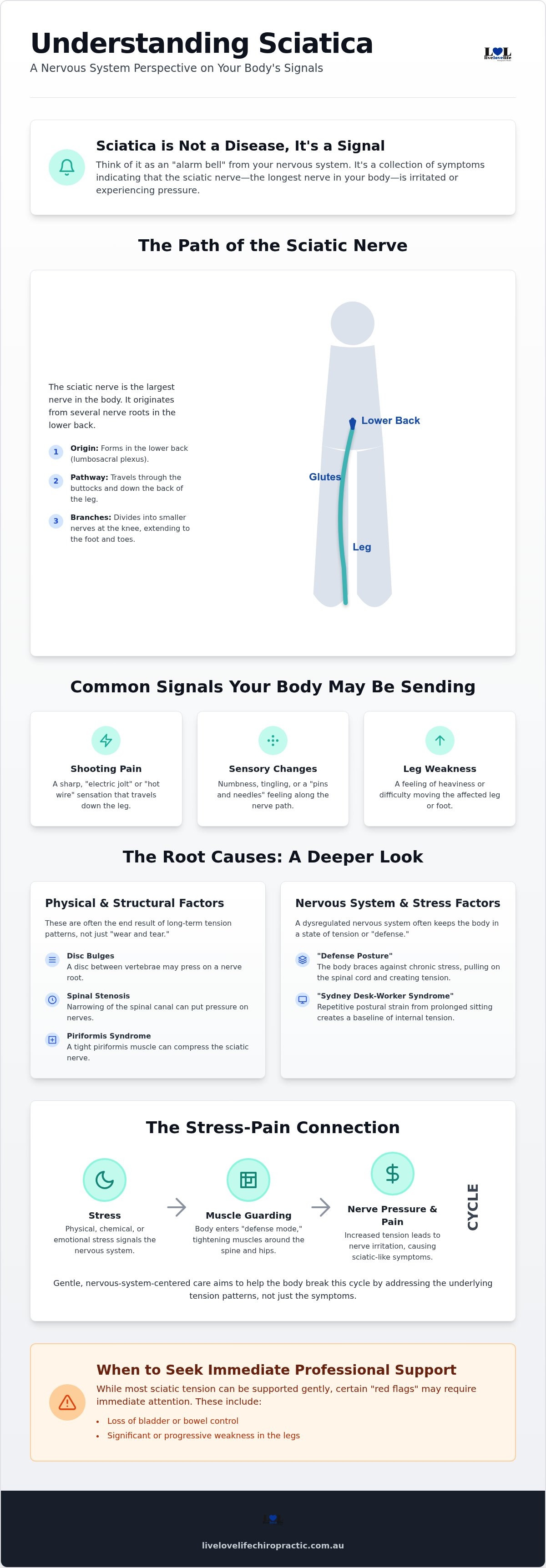
Many people visit our Woollahra practice asking, "✓ what is Sciatica exactly?" It's a great question because there's often a lot of confusion surrounding the term. Sciatica isn't actually a medical condition or a standalone disease. Instead, it's a collection of symptoms that tell us your body is experiencing some form of nerve irritation. The sciatic nerve is a marvel of human anatomy; it's the longest and thickest nerve in your body, running from your lower back, through your hips, and all the way down each leg.
In clinical practice, I often find that patients describe the sensation as a "hot wire" or an "electric jolt" that dictates how they move throughout their day. This discomfort can be quite limiting for busy professionals in the Eastern Suburbs. It's helpful to distinguish between "True Sciatica," which involves direct compression of the nerve root, and "Referral Pain," where muscle or joint tension mimics that familiar shooting sensation. Understanding this difference is the first step toward a more comfortable lifestyle.
Common Symptoms: How to Identify Sciatic Tension
If you're living in Bondi or Bellevue Hill and spending long hours at a desk, you might notice specific patterns of discomfort. Sciatic tension usually presents as radiating pain that travels from the lower back through the glutes and down to the calf or even the toes. You may also feel sensory changes like "pins and needles" or a heavy, weak feeling in your leg. These symptoms often worsen during prolonged sitting or sudden movements like sneezing, as these actions increase the pressure within your internal system.
Key Takeaways for Early Relief
Think of this nerve pain as an "alarm bell" rather than a permanent fixture of your life. It's a signal that your body's internal harmony is being challenged by deep-seated tension. An early neurostructural assessment is essential to determine the exact source of the irritation and find a gentle path forward. Sciatica is a signal of underlying spinal tension that aims to protect the body from further stress.
The Root Causes: Why Sciatic Pain Occurs and Persists
While many people focus on the mechanical side of ✓ what is Sciatica, we believe it's essential to look at the body as a dynamic, living system. Traditionally, causes like bulging discs or spinal stenosis, which is the narrowing of nerve pathways, are the primary suspects. These physical changes can certainly put pressure on the nerve. However, we often find that these structural shifts are actually the end result of long-term patterns within the nervous system rather than just random "wear and tear."
One pattern I often notice in my Woollahra practice is the "Sydney desk-worker syndrome."
This occurs when repetitive postural strain from long hours at a computer creates a baseline of tension that the body eventually can't ignore. When your system is under constant pressure, it often adopts a "defence posture." This is a physiological state where the body braces for stress, which can actually pull on the spinal cord and create the perfect environment for sciatic discomfort to persist.
We also look closely at the piriformis muscle, located deep in the glutes. When your nervous system is in a state of high alert, it can cause this muscle to tighten and "pinch" the sciatic nerve as it passes by. This is why addressing the muscle alone rarely provides lasting relief; we must also address the underlying signal that's telling the muscle to stay tight. If you're feeling this tension, a gentle assessment of your spinal health can be a wonderful first step toward clarity.
The Stress-Pain Connection
A dysregulated nervous system often keeps your muscles in a state of "guarding," which only serves to exacerbate nerve pressure. This creates a cycle where physical pain leads to more stress, which then causes more muscle tension. Understanding Nervous System Regulation & Chiropractic Care in Woollahra helps us see how calming this internal "alarm system" is vital for supporting your journey back to comfort.
When to Seek Professional Support
While most sciatic tension can be managed with a gentle, supportive approach, there are certain "red flags" that require immediate attention. These include a loss of bladder or bowel control or significant weakness in your legs, which may indicate a rare but serious condition called cauda equina syndrome. Beyond these emergencies, it's worth noting that "waiting it out" for standard pain can sometimes lead to chronic neural pathways that become harder to soothe later in life.
Supporting Your Recovery: A Gentle Path to Relief
Finding a way back to comfort doesn't have to involve high-pressure tactics or forceful movements. Many people in our community are relieved to learn that conservative management, such as ergonomic adjustments and nervous system support, can make a significant difference. When you're trying to understand ✓ what is Sciatica and how to manage it, the focus often shifts toward how we can help the body release its own stored tension. This journey is about partnership and listening to the signals your system is sending.
In clinical practice, we aim to support the body's natural ability to self-regulate rather than using forceful manual adjustments. This is why we specialise in Network Spinal care. This low-force approach uses gentle "entrainments" at specific points along the spine. These precise touches aim to help your system switch from a protective "stress state" to a more expansive "healing state," which naturally reduces nerve irritation and promotes structural harmony.
Practical Steps You Can Take at Home
While professional support is vital, there are small shifts you can make in your daily Bondi lifestyle to support your progress. We often suggest gentle "nerve flossing" exercises and taking frequent micro-breaks if you're working from a home office in Paddington or Double Bay. Using simple breathwork is another powerful tool; it signals safety to your nervous system, which may help relax those tight gluteal muscles that often contribute to the problem. These small, rhythmic habits can create a sense of ease throughout your day.
The Livelovelife Approach to Sciatica
Your journey with us begins with a comprehensive Initial Consultation. During this time, we perform a detailed neurostructural examination to map out exactly how your system is processing stress and where tension is held. We are deeply committed to the long-term health and vitality of our Eastern Suburbs community, providing personalised care plans that look beyond the immediate symptoms. You can find more details about our Initial Assessment and Diagnostic Fees on our approach page, which serves as a transparent baseline for your care.
Reclaim Your Vitality and Ease
Your body isn't a broken machine; it's a living system with immense potential for harmony. Gaining clarity on ✓ what is Sciatica allows you to see those sharp sensations as a protective signal rather than a permanent limitation. By looking at the root causes of tension and the way your nervous system holds onto stress, you can begin a gentle journey back to comfort.
In my 23 years of clinical practice, I've seen how gentle, non-invasive Network Spinal care aims to support the body's natural ability to release deep-seated patterns. Our personalised neurostructural examinations help us map out a supportive path tailored specifically to your life in Woollahra or Bondi. We're here to partner with you as you move from a state of physical guarding toward one of vitality and ease.
We look forward to welcoming you into our warm studio environment and exploring the possibilities for your long-term health together.
Frequently Asked Questions
Can a chiropractor help with sciatica without 'cracking' my back?
Yes, we can certainly support your journey back to comfort without any forceful manual adjustments or "cracking." In our Woollahra practice, we specialise in Network Spinal care, which uses light, precise touches to help your nervous system release tension naturally. This gentle method aims to shift your body out of a protective state and into a state of ease, making it a supportive choice for those who prefer a non-invasive approach.
How long does it typically take to see improvements in sciatic pain?
Every person's journey is unique, but many individuals begin to notice subtle shifts in their comfort levels within the first few weeks of consistent care. While some experience a sense of relief early on, establishing deeper structural harmony often takes more time. We focus on sustainable wellness rather than temporary masks, allowing your body the necessary time to recalibrate its internal signals and build long-term resilience.
Is walking good for sciatica, or should I rest?
Gentle movement like walking is typically more beneficial than prolonged bed rest for most people experiencing nerve tension. Walking helps maintain healthy circulation and prevents the muscles around the nerve from becoming even tighter. It's often best to take short, frequent strolls on flat ground around Bondi or your local park rather than one long trek, as this keeps your system moving without overtaxing the sensitive nerve pathways.
What is the difference between a pinched nerve and sciatica?
A pinched nerve is a general term for any nerve irritation, while sciatica specifically refers to the irritation of the body's largest nerve. When you ask ✓ what is Sciatica, you're looking at a specific set of symptoms like shooting pain or numbness that follows the path of the sciatic nerve. Other pinched nerves might occur in the neck or wrist, but sciatica is unique because it travels from the lower back all the way down the leg.
Can stress actually cause my sciatic pain to flare up?
Stress may absolutely influence the intensity of your symptoms by keeping your nervous system in a state of high alert. When you're under pressure, your muscles often "guard" or tighten, which can increase the physical pressure on the sciatic nerve. In clinical practice, I've seen that calming the system's stress response through gentle care often leads to a noticeable reduction in the physical sensations of nerve pain and discomfort.
Is it safe to exercise while I have shooting pain down my leg?
It's important to listen to your body's signals and avoid any high-impact exercise that triggers sharp, shooting pain. While light mobility work and breathwork are often helpful, pushing through intense discomfort can sometimes exacerbate the irritation. We usually recommend a professional neurostructural assessment first to ensure your chosen movements are supporting your recovery rather than challenging your body's natural protective mechanisms.


Comments