
Preventing Back Pain at Work in Edgecliff: A Gentle Guide to Spinal Health
- Dr Xavier Mirouze

- Jun 30
- 7 min read
Updated: Aug 4

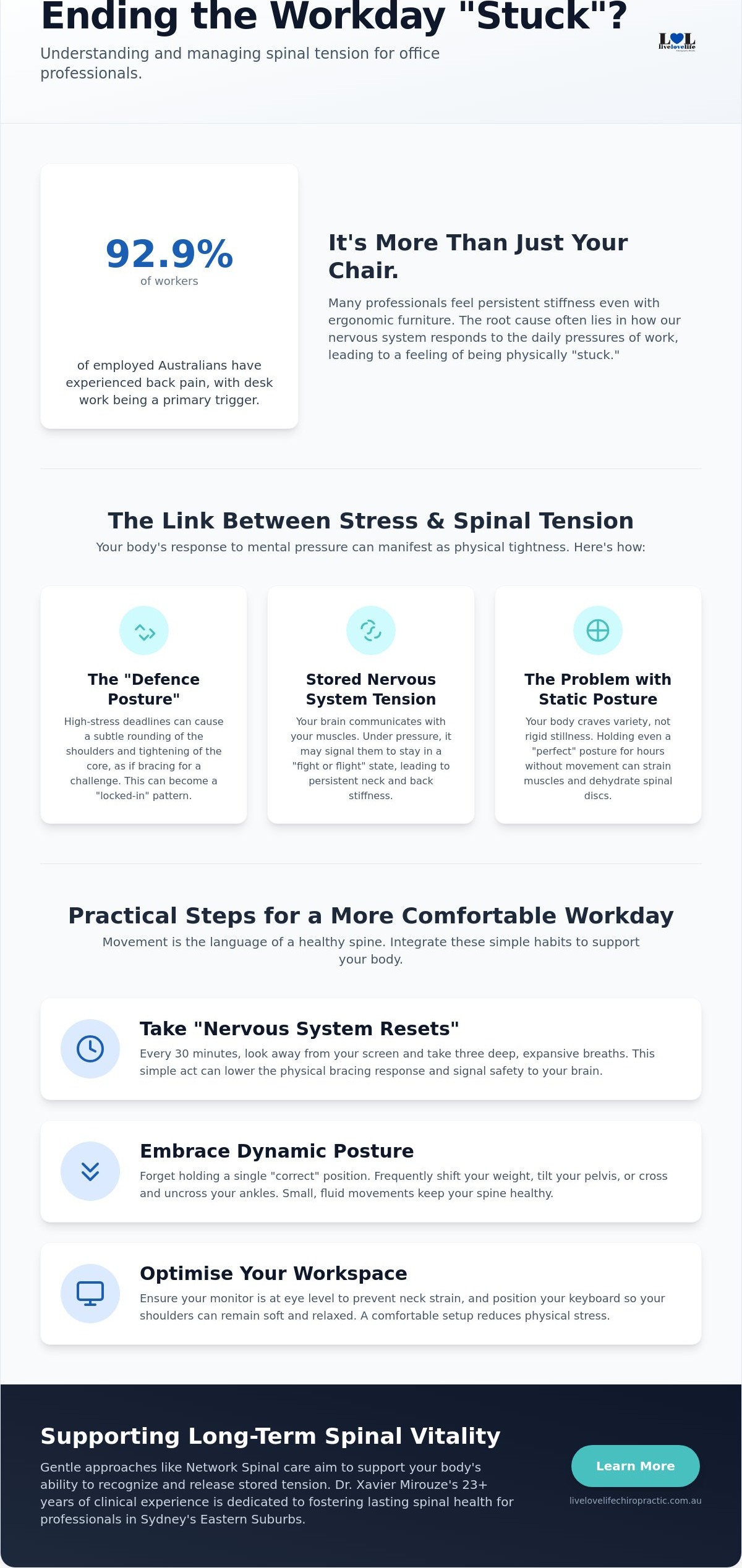
Did you know that 92.9% of employed Australians have experienced back pain, with desk work and computer use cited as the most frequent triggers? If you often finish your day in an Edgecliff office feeling persistent stiffness or like you’re "stuck" in a certain posture, you’re certainly not alone. Many professionals in our local community are finding that preventing back pain at work in Edgecliff involves more than just ergonomic chairs; it’s about understanding how our bodies store the tension of a busy day.
We believe your body is a system with immense potential, yet it’s easy for mental stress to manifest as physical tightness that weighs you down. You deserve a workday that feels comfortable and fluid rather than restrictive. In this guide, we’ll explore how supporting your nervous system can help manage work-related spinal tension for a more productive afternoon. We’ll look at the root causes of that "stuck" feeling and how a gentle approach to spinal health may influence your overall sense of well-being and energy.
Table of Contents
Why Your Office Job in Edgecliff May Contribute to Back Tension
Living and working in Sydney’s Eastern Suburbs often means balancing a fast-paced career with a desire for a vibrant, active lifestyle. Many professionals find that the hours spent at a desk lead to a persistent sense of physical restriction. This isn't just about sitting too long; it's often about how our bodies react to the high-stakes environment of modern office life. Even with a high-end ergonomic chair, you might still leave the office feeling stiff because your body is reacting to more than just your furniture.
When you’re facing a tight deadline or a high-pressure meeting, your body may naturally adopt what we call a "defence posture." This involves a subtle rounding of the shoulders and a tightening of the core, as if you’re bracing for a challenge. While this response is helpful for short-term focus, repetitive daily habits can cause this tension to become "locked" into your system. Understanding back pain involves looking beyond the surface of your desk setup to see how your nervous system is processing your environment. Effective strategies for preventing back pain at work in Edgecliff focus on addressing these deeper patterns of stored tension.
Stored Tension: Your nervous system may hold onto the day's stress long after you've left the office.
Static Posture: Even "correct" posture can be stressful if it's held rigidly for hours without movement.
Cumulative Impact: Small, repetitive movements like typing or mouse clicking may lead to significant spinal tension over time.
The Link Between Work Stress and Nervous System Regulation
Your brain is constantly communicating with your muscles. Under cognitive pressure, it may signal them to stay in a state of readiness. This "fight or flight" response may influence the comfort of your lower back and neck, creating a feeling of being "stuck." Stress and nervous system care focuses on helping the body recognise and release these defensive signals.
Dr. Xavier Mirouze, with over 23 years of clinical experience, has observed that emotional stress often creates specific physical spinal patterns. Preventing back pain at work in Edgecliff is about helping your body transition out of a defensive state so you can experience more ease. We view the spine as a gateway to better living, where releasing tension allows your body to function at its peak capacity.
Practical Steps for Supporting Your Spine During the Workday
Movement is the language of a healthy spine. Many professionals believe that sitting in a single "perfect" position is the key to comfort, but our bodies are designed for rhythm and change. Whether you're commuting through the busy streets of Double Bay or waiting on the platform at Edgecliff station, these transitional moments are perfect opportunities to check in with your body. Practical strategies for preventing back pain at work in Edgecliff often start with the simple realisation that our bodies crave variety rather than rigid stillness.
Micro-breaks are essential, not just for your muscles, but for your nervous system too. Every 30 minutes, try to take a "nervous system reset" by looking away from your screen and taking three deep, expansive breaths. This simple act can signal safety to your brain, which may help lower the physical bracing response we discussed earlier. Following general guidelines for protecting your back provides a solid foundation for daily comfort and long-term vitality.
Beyond Sitting Straight: Embracing Dynamic Posture
Forget the idea of staying at strict 90-degree angles all day. Dynamic sitting involves frequently shifting your weight, crossing and uncrossing your ankles, or gently tilting your pelvis while you work. These small, fluid movements help keep the spinal discs hydrated and prevent the "stuck" feeling that often leads to afternoon stiffness. If you find that your usual stretches aren't quite enough, exploring Network Spinal care may offer a new perspective on releasing deep-seated tension.
Optimising Your Workspace for Your Body’s Needs
Your environment plays a significant role in how much tension you carry. Ensure your monitor is at eye level so your neck doesn't have to strain forward, and keep your keyboard at a height that allows your shoulders to remain soft. Beyond the physical setup, consider the sensory impact of your office. Harsh overhead lighting or constant background noise can keep your nervous system on high alert, which may contribute to physical tightness in the shoulders and lower back.
How Gentle Chiropractic Care Supports Long-Term Spinal Vitality
While ergonomic adjustments and movement habits are vital, many people find that professional support provides a deeper layer of care for lasting comfort. Network Spinal care is a gentle, non-invasive approach that moves away from traditional manual adjustments. Instead of forceful movements, it uses precise, light touches known as entrainments to help your nervous system recognise and release stored tension. This method is a popular choice for those looking for a supportive way of preventing back pain at work in Edgecliff without the intensity of aggressive techniques.
Understanding your body's unique patterns is the first step toward a more vibrant life. During a neurostructural examination, we look at how your spine and nervous system are currently processing the stresses of your day. This assessment helps us identify where tension is being held and how it may be affecting your energy levels. By focusing on structural harmony, we aim to support your body's innate ability to adapt to the demands of a busy office environment.
A Partnership in Health: The Livelovelife Approach
Dr. Xavier Mirouze brings over 23 years of clinical experience to every person he welcomes to our Woollahra studio. He views health as a collaborative journey, helping you better understand the connection between your lifestyle and your physical well-being. When you book an initial consultation, we take the time to listen to your story and explore how your body can reach its peak capacity.
Our wellness care programs are designed specifically for the active, fast-paced Sydney lifestyle. We integrate modern ergonomic and posture tips with our gentle care to ensure you have the practical tools to thrive. This proactive approach helps many professionals in the Eastern Suburbs maintain their vitality, ensuring that preventing back pain at work Edgecliff becomes a natural part of a healthy, balanced life.
Towards a Future of Ease and Fluidity at Work
Navigating the demands of a professional career in Sydney doesn't have to mean accepting persistent physical stiffness as your daily norm. By shifting from a static, defensive posture to one that embraces dynamic movement and nervous system awareness, you're choosing a more vibrant way to live and work. We've explored how small, rhythmic changes and a deeper understanding of your body's signals can make a profound difference in preventing back pain at work in Edgecliff.
If you're ready to explore a gentle, supportive path toward greater comfort, our Woollahra studio is here to welcome you. Dr. Xavier Mirouze brings over 23 years of clinical experience to his practice, specialising in the gentle, non-invasive approach of Network Spinal care. This partnership in health aims to support your body's natural capacity to release stored tension and find its unique balance. We invite you to book your initial neurostructural examination with Dr. Xavier Mirouze today and discover the potential for a more comfortable, energetic workday. Your journey toward a more fluid and connected future starts with a single, gentle step.
Frequently Asked Questions
How often should I get up from my desk to prevent back pain?
Aim to stand up or change your position at least once every 30 minutes to maintain spinal fluidity. Even a brief 60 second stretch or a walk to the water cooler helps reset your posture and prevents the "stuck" feeling common in office environments. This frequency is a key habit for preventing back pain at work in Edgecliff by ensuring your spinal discs stay hydrated and your nervous system remains alert throughout the day.
Is Network Spinal care suitable for office-related neck and back tension?
Many people experience positive changes in office-related tension through Network Spinal care because it focuses on the nervous system's response to stress. Rather than using forceful adjustments, this gentle approach uses light touches to help your body recognise and release its own patterns of bracing. It's particularly useful for professionals who feel that their mental stress is manifesting as physical tightness in the neck or lower back.
What is the best type of chair for preventing back pain at work?
The most effective chair is one that encourages dynamic movement rather than keeping you in a fixed, rigid position. Look for an adjustable chair that supports the natural curve of your lower spine while allowing you to shift your weight easily. However, it's helpful to remember that even the most advanced ergonomic chair cannot replace the benefits of regular movement and frequent postural resets during your workday.
Can stress at work actually cause physical pain in my spine?
Mental and emotional stress can directly influence physical tension in your spine. When you're under pressure, your brain may signal your muscles to tighten as a protective response, often leading to what we call a "defence posture." This cumulative tension may contribute to the persistent stiffness many office workers feel, highlighting why preventing back pain at work in Edgecliff requires a holistic look at both physical and mental stressors.


Comments